

Launch on Two Stores at Once: How Our Mobile Approach Cuts Your “Time-to-Market” in Half

post

Data Security: Is Your Internal System Vulnerable to a Breach?

In today’s digital-first economy, data is the lifeblood of every business. Whether you are managing supply chains through an ERP or processing customer transactions on an e-commerce platform, your internal systems house a treasure trove of sensitive information.

However, many businesses operate under a false sense of security, believing that “small-scale” operations or “internal-only” systems are off the radar for cybercriminals. The reality is quite the opposite: internal vulnerabilities are often the easiest entry points for a devastating breach.

The Hidden Risks in Your Internal Infrastructure

A data breach isn’t always a high-tech “hack” like you see in movies. More often, it is a result of structural weaknesses within your business software.

  • Legacy System Gaps: Older, “patchwork” systems often lack the encryption standards required to fend off modern threats.

  • Poor Access Control: If every employee has administrative access to your entire database, one compromised password can bring down the whole company.

  • Insecure API Integrations: When your website or app talks to your internal database, that bridge (the API) is a prime target if not properly secured.

Custom vs. Off-the-Shelf: Which is Safer?

Many businesses start with generic, one-size-fits-all software. While convenient, these systems are “open books” for hackers who study their public source code to find universal backdoors.

This is where Custom Solutions provide a distinct advantage. By building a system tailored specifically to your workflow, you can implement proprietary security layers and “Security by Design” principles. At Eocambo Technology, we specialize in building secure, scalable systems—from custom ERPs to high-performance e-commerce engines—designed to keep your data under lock and key.

Check out our range of secure business tools: Explore Our Solutions

How to Identify if You Are at Risk

Ask yourself these three questions:

  1. Is your data encrypted at rest and in transit? If a hacker intercepts your data, can they read it in plain text?

  2. When was your last security audit? Systems require constant monitoring to stay ahead of evolving threats.

  3. Are your apps and web platforms synced securely? A vulnerability in your mobile app could lead directly to your internal server.

We have helped numerous clients migrate from vulnerable, fragmented setups to robust, integrated ecosystems that prioritize data integrity. You can see how we’ve implemented these secure architectures in our previous work.

See our successful projects in action: View Our Portfolios

Proactive Protection: The Best Defense

Data security is not a “set it and forget it” task. It requires a partner who understands the intersection of functionality and safety. Whether you need a ground-up custom ERP or a secure mobile app for your customers, ensuring your internal systems are breach-proof is the most important investment you can make this year.

Don’t wait for a “System Offline” notification to realize you have a vulnerability. Secure your future today.

From Spreadsheets to Software: When to Automate Your Operations

Every great business starts somewhere, and usually, that “somewhere” is a spreadsheet.

Spreadsheets are the Swiss Army knives of early-stage business. They are accessible, affordable, and infinitely flexible. You use them to track inventory, manage customer lists, calculate payroll, and forecast sales. When you have five employees and fifty customers, a well-organized Google Sheet or Excel file is all the “system” you need.

But as your business grows, the very tools that once helped you organize can start to hold you back. What used to take minutes now takes hours. Data starts slipping through the cracks. You realize you aren’t managing your business anymore; you are managing spreadsheets.

The transition from manual processes to automated software is one of the most critical inflection points in a company’s lifecycle. The biggest challenge isn’t the technology itself; it’s knowing when to make the leap.

Here is how to recognize the signs that your operations have outgrown spreadsheets and are ready for dedicated software.

The Hidden Costs of the “Spreadsheet Status Quo”

Before looking at the signs of change, it’s important to understand why relying on spreadsheets indefinitely is dangerous.

While they seem “free,” spreadsheets carry hidden costs as you scale:

  • Human Error: A misplaced decimal point or an overwritten formula can lead to disastrous financial mistakes that go unnoticed until it’s too late.

  • Version Chaos: “Who has the latest version of the Q3 forecast? Is it ‘Final_V3.xlsx’ or ‘REALLY_FINAL_V4.xlsx’?”

  • Information Silos: Your sales team’s spreadsheet doesn’t talk to your warehouse’s spreadsheet. The result is disjointed data and missed opportunities.

  • Lack of Real-Time Visibility: If you need to wait until the end of the month to know if you are profitable, you cannot make agile business decisions today.

5 Red Flags That It’s Time to Automate

Moving to a dedicated operational system—often called Enterprise Resource Planning (ERP)—is a significant step. You shouldn’t do it prematurely, but waiting too long stymies growth.

If you recognize any of these five scenarios in your daily operations, it is time to consider automation.

1. Your Team Spends More Time Importing Data Than Analyzing It

The 80/20 rule should apply to your data: 20% of your time gathering it, and 80% using it to make decisions.

If your key personnel are spending hours every week copy-pasting data from one sheet to another, reformatting CSV files, or manually entering invoices into an accounting system, you are wasting valuable human resources. Automation handles the repetitive data entry, freeing your team to do the high-value thinking you hired them for.

2. You Are Experiencing “Growing Pains” Errors

When volume increases, manual processes break. Perhaps you oversold products because inventory counts weren’t updated in real-time. Maybe a customer was billed incorrectly because two departments were looking at different pricing sheets.

When errors start happening not because of incompetence, but because the sheer volume of work is overwhelming your manual checks and balances, you need a system that enforces accuracy automatically.

3. You Cannot Answer Simple Questions Instantly

Imagine an important client calls and asks about the status of their complicated order. Can you give them an answer in thirty seconds? Or do you have to say, “Let me check with the warehouse, then check with shipping, and call you back in an hour”?

If you have to open five different files or query three different department heads to get a snapshot of your business health, your operations are disconnected. Software provides a “single source of truth”—one dashboard that tells you exactly where things stand.

4. Your Spreadsheets Are Crashing

This is a literal sign. If your master Excel file takes five minutes to open, frequently freezes, or has become so complex with nested macros that only one person in the company knows how to fix it if it breaks, you have functionally outgrown the tool. Relying on a fragile file for core operations is a massive business risk.

5. You Are Turning Down New Business Because You Can’t Handle the Admin Load

This is the most painful sign of all. Your sales team is bringing in customers, but operations is waving a white flag. If you are hesitating to scale because you know your current back-office processes will collapse under the new weight, your lack of systems has become the bottleneck for your company’s revenue.

The Next Step: Custom Solutions for Unique Problems

Moving away from spreadsheets doesn’t just mean buying expensive, off-the-shelf software that forces you to change how you work. Every growing business has unique operational quirks that generic software can’t address.

The goal of automation is to build a system that fits your processes, rather than bending your processes to fit a rigid system. This is where custom Enterprise Resource Planning (ERP) comes into play. A custom system connects your finance, inventory, sales, and operations into one seamless flow designed specifically for your business model.

If the red flags above sound familiar, it’s time to stop fearing the change and start exploring how dedicated software can unlock your next stage of growth. If you are ready to streamline your operations and leave the spreadsheet chaos behind, it might be time to explore custom solutions designed for your specific needs. You can learn more about how to approach this transition at https://eocambo.com/our-solutions/.

Why Your Website Speed Directly Impacts Your Revenue

In the digital marketplace, every millisecond counts. While design and content are crucial, the technical performance of your website—specifically its speed, is often the invisible factor that determines whether a visitor becomes a customer or a bounce statistic.

Here is an article breaking down exactly why website speed is a direct driver of your bottom line.

Why Your Website Speed Directly Impacts Your Revenue

In an era of instant gratification, your customers aren’t just looking for quality; they are looking for it now. Research consistently shows that as page load time increases, the probability of a user leaving (bouncing) skyrockets.

1. The “Impatience Factor”: Bounce Rates and Speed

A slow website creates friction. If a page takes longer than three seconds to load, over 40% of users will abandon it. This isn’t just a lost visit; it’s a potential customer moving directly to a competitor.

  • 1–3 seconds: Bounce probability increases by 32%.

  • 1–5 seconds: Bounce probability increases by 90%.

  • 1–10 seconds: Bounce probability increases by 123%.

2. Search Engine Visibility (SEO)

Google has explicitly stated that page speed is a ranking factor. Their “Core Web Vitals” are metrics used to measure the health of a site’s user experience.

If your site is slow, you will rank lower in Search Engine Results Pages (SERPs). Lower rankings mean less organic traffic, which leads to fewer opportunities for sales. In short: Slow speed = Lower visibility = Lower revenue.

3. Conversion Rates: The Millisecond Advantage

Conversion rate optimization (CRO) is often focused on button colors or headlines, but speed is the foundation. Even a 0.1-second improvement in site speed can increase conversion rates by nearly 8–10% for retail sites.

Load Time Impact on Conversion
< 2 Seconds Peak conversion window for most E-commerce sites.
3 – 4 Seconds Conversion rates begin to drop by roughly 5-10% per second.
5+ Seconds Significant “cart abandonment” and loss of consumer intent.

The Psychological Impact: Trust and Brand Perception

Speed is a proxy for professionalism. When a site loads instantly, it feels secure, modern, and reliable. Conversely, a sluggish site triggers subconscious “red flags” for users:

  • Security Concerns: Users are less likely to enter credit card info on a site that feels “broken” or slow.

  • Customer Support: A slow site suggests that the company’s customer service might be equally slow.

“A slow website is like a physical store with a door that’s hard to open. Most customers will simply walk to the next shop rather than struggle to get in.”

How to Reclaim Your Revenue: Quick Wins

If your site is lagging, you don’t necessarily need a full rebuild. Start with these high-impact technical fixes:

  • Optimize Images: Large image files are the #1 cause of slow sites. Use WebP formats and compress images before uploading.

  • Enable Browser Catching: This stores elements of your site on a visitor’s device so the site loads faster on their next visit.

  • Use a Content Delivery Network (CDN): A CDN stores your site on a global network of servers, ensuring it loads quickly regardless of where the user is located.

  • Minify Code: Strip away unnecessary characters from your HTML, CSS, and JavaScript.

The Bottom Line

Website speed is no longer just a “technical spec”—it is a core business metric. By investing in performance, you aren’t just making your site faster; you are actively reducing friction in the sales funnel and protecting your profit margins.

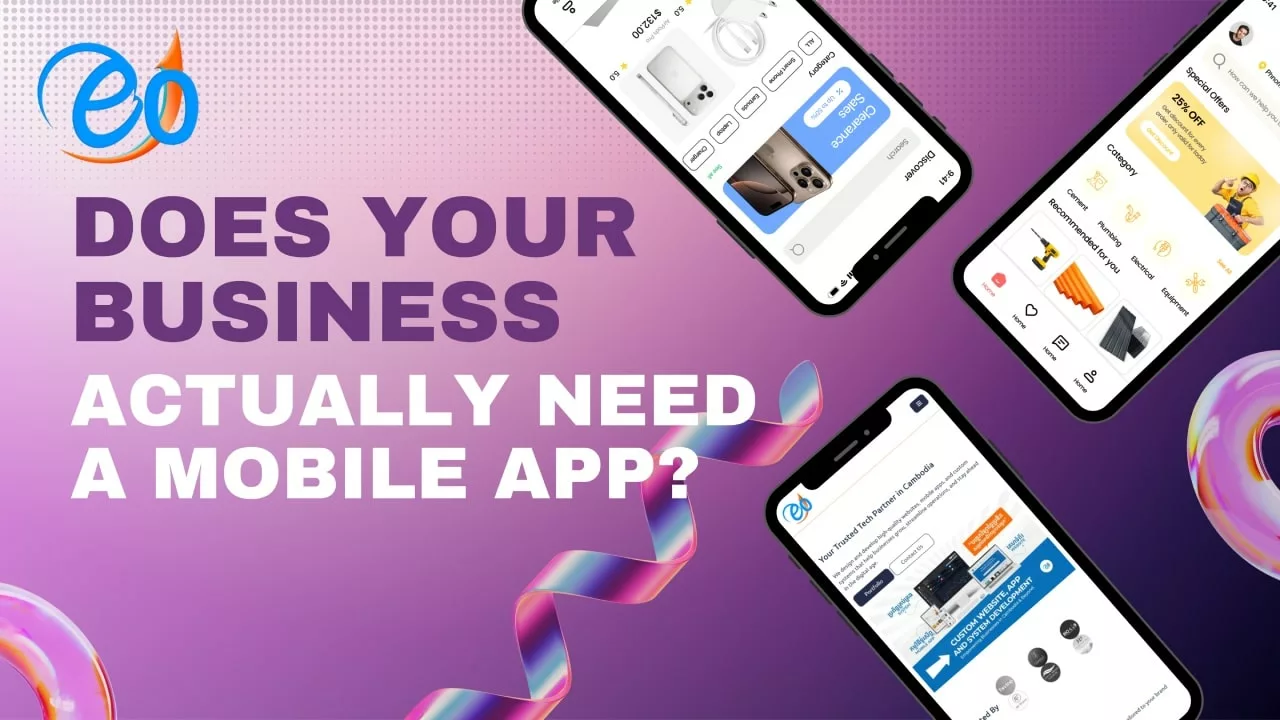
Does Your Business Actually Need a Mobile App?

In today’s digital-first economy, the knee-jerk reaction for many business owners is: “We need an app for that.” With billions of smartphone users worldwide, the allure of having a dedicated icon on a customer’s home screen is strong.

However, building a high-quality mobile app is a significant investment of time, money, and maintenance. Before you dive into development, it is crucial to ask: Does your business actually need a mobile app, or would a mobile-responsive website suffice?

Here is a guide to help you decide.

1. The Frequency of Use

One of the biggest “app killers” is low frequency. If your customers only interact with your business once every six months (like a specialized repair service or a niche consultancy), they are unlikely to download and keep an app.

  • You need an app if: Customers interact with you daily or weekly (e.g., fitness tracking, food delivery, banking, or project management).

  • A website is enough if: Your relationship is transactional and infrequent.

2. Required Functionality

Does your service require hardware features that a browser can’t easily access?

  • You need an app if: You need seamless integration with a phone’s camera (for AR or scanning), GPS (for real-time tracking), Push Notifications, or offline access to data.

  • A website is enough if: You are simply displaying information, blog posts, or a standard e-commerce catalog.

3. Customer Loyalty and Personalization

Apps are the ultimate tool for retention. They allow you to create a “walled garden” where you can offer personalized rewards, saved preferences, and one-click checkouts.

  • You need an app if: You want to build a high-engagement loyalty program or provide a highly personalized user dashboard.

  • A website is enough if: You are focused primarily on Top-of-Funnel discovery and SEO (getting new people to find you via Google).

4. Speed and User Experience

While mobile websites have become incredibly fast, native apps still offer the smoothest user experience. They store data locally, meaning transitions are instant and the UI is specifically tailored to the thumb-driven nature of mobile usage.

The Verdict: How to Move Forward

If you’ve realized that your business processes require complex workflows, constant communication, or a specialized digital tool, then a mobile app is likely the engine that will drive your next stage of growth.

If you are ready to explore how a custom digital solution can transform your business, we are here to help you navigate the process.

  • See what’s possible: Explore Our Products & Solutions to see the technologies we leverage.

  • Get inspired: Browse through Our Completed Projects to see how we’ve helped other businesses scale.

  • Take the next step: Not sure where to start? Reach out to our team via our Contact Us Page for a consultation.

Conclusion: Don’t build an app just because everyone else has one. Build an app because it solves a problem, simplifies a journey, or provides value that a website simply cannot.

5 Signs It’s Time to Redesign Your Corporate Website

In the fast-paced world of technology and business, your corporate website is more than just an address—it’s your primary digital storefront, lead generation engine, and brand ambassador. If your website isn’t performing, it’s actively holding your business back.

Ignoring an outdated or ineffective website can lead to lost conversions, diminished credibility, and frustration for both your team and your potential customers.

Here are five critical signs that tell you it’s time to stop patching up the old site and invest in a full corporate website redesign.

1. Your Mobile Experience is a Liability, Not an Asset

We live in a mobile-first world. If your visitors are forced to squint, pinch, and horizontally scroll to read your content on a smartphone, they won’t stick around. A non-responsive design is the quickest way to lose credibility and drive traffic straight to your competitors.

  • The Technical Reality: Google prioritizes mobile-friendly sites. If your site doesn’t offer a seamless experience on all devices, your search rankings are suffering.

  • The User Experience: A smooth, intuitive mobile experience is no longer a luxury—it’s a basic expectation. If you can’t easily navigate to the product page on a phone, your solution is a redesign.

2. Slow Load Times Are Crushing Your Conversion Rate

User patience is minimal online. If your website takes more than 3 seconds to fully load, you are statistically losing a significant percentage of potential customers. Slow load times are often a tell-tale sign of a legacy system, unoptimized images, or bloated code.

  • The Business Impact: Even minor delays translate directly into lost revenue. Visitors associate fast sites with professional, modern businesses.

  • The Fix: A redesign allows you to integrate modern performance tools and clean, efficient code, ensuring a lightning-fast experience that keeps users engaged.

3. The Design Looks Dated and Fails to Reflect Your Current Brand

Design trends evolve rapidly, and in the technology sector, looking outdated is synonymous with being behind the curve. If your website utilizes old-school visual effects, low-resolution imagery, or a cluttered, complex layout, it sends a clear signal: your company is stuck in the past.

  • The Credibility Factor: Your website is a direct reflection of your company’s professionalism. A modern, crisp design builds trust and reinforces your status as an industry leader.

  • The Opportunity: A redesign is the perfect chance to align your digital presence with your current marketing message and future vision.

4. Updating Content is a Painful, Manual Process

A healthy corporate website is a dynamic one. If simple tasks—like updating a team member’s bio, adding a new service description, or publishing a blog post—require specialized coding knowledge, IT support, or a complex series of steps, your CMS is outdated.

  • The Marketing Bottleneck: A difficult-to-manage site hinders your marketing team’s ability to react quickly to market changes or maintain fresh, relevant content.

  • The Solution: Migrating to a modern, intuitive CMS (like WordPress, HubSpot, or similar platforms) during a redesign puts the power of content management back in your team’s hands.

5. It’s Not Generating Leads or Driving Clear Actions

Ultimately, your corporate website must serve a business purpose: generating leads, closing sales, and providing information. If your analytics show high bounce rates, low time-on-page, and poor conversion rates, your site has failed its primary mission.

  • The Failure Point: Is it difficult for users to find your primary Call-to-Action (CTA)? Are the pathways to contact buried under layers of navigation?

  • The Redesign Focus: A successful redesign is centered on Conversion Rate Optimization (CRO). It establishes clear user journeys, prominent CTAs, and optimized landing pages designed to turn visitors into qualified leads.


Time to Evaluate Your Digital Presence

If any of these five signs resonate with your current situation, it’s not a moment too soon to begin planning a comprehensive website redesign. It is an investment in your company’s future, ensuring your digital storefront works as hard as your sales team to drive success.

How Legacy Systems Are Holding Your Business Back

In the fast-paced world of digital business, sticking with what you know can sometimes be the riskiest move of all. “Legacy systems” outdated software, hardware, or processes might feel comfortable, but they often act as an invisible anchor, slowing down operations and draining resources.

While these systems may have served you well in the past, relying on them in today’s competitive market is a liability. Here is how holding onto outdated technology is quietly sabotaging your growth and why modernization is no longer optional.

1. The Hidden Costs of “Free” Maintenance

It is easy to assume that keeping an old system is cheaper than buying a new one. However, the maintenance costs of legacy software often far exceed the price of an upgrade. As technology evolves, finding technicians who understand outdated code or hardware becomes difficult and expensive.

Furthermore, legacy systems are inefficient. Your team likely spends valuable hours on manual workarounds, data entry, and fixing bugs—time that could be spent on innovation and sales.

2. Security Vulnerabilities

Cybersecurity is perhaps the most critical reason to move away from legacy systems. Older software stops receiving security patches and updates from developers, leaving “back doors” open for cybercriminals.

Modern systems come with built-in, up-to-date security protocols that protect your business and your customer’s sensitive data. Clinging to the past doesn’t just risk efficiency; it risks your reputation.

3. Inability to Scale

When your business grows, your technology needs to grow with it. Legacy systems are notoriously rigid. They struggle to integrate with modern tools like cloud computing, mobile apps, or advanced analytics.

If you want to expand into e-commerce, offer a mobile app to customers, or simply automate your inventory, an outdated system will likely say “no.” Modern solutions are designed to be flexible, allowing you to add new features and modules as you scale.

4. Poor Customer Experience

Today’s customers expect speed and convenience. They want to order online, track deliveries in real-time, and get instant support. Legacy systems often result in slow processing times and disjointed data, leading to frustrated customers who may take their business elsewhere.

By modernizing, you provide a seamless experience that builds loyalty and trust.

How We Can Help

At eOcambo Technology, we understand that transitioning from the old to the new can feel overwhelming. That is why we specialize in bridging the gap between where you are and where you need to be. Whether you need a custom-built system or a ready-to-launch mobile application, we have the tools to modernize your operations without the headache.

From grocery store apps to comprehensive business management systems, our products are designed to streamline your operations and future-proof your business.

Don’t let yesterday’s technology dictate your tomorrow. If you are ready to cut costs, improve security, and scale your business, we are here to guide you every step of the way.

Contact us today for a free consultation and let’s discuss how we can unlock your business’s full potential.

Top Reasons to Choose an Online Store for Your Shopping Needs

1. Unmatched Convenience

One of the biggest reasons to choose an online store for your shopping is the sheer convenience it offers. With online shopping, you can browse and buy products anytime, anywhere, eliminating the hassle of commuting to a physical store. Imagine avoiding the traffic, the crowded malls, and the long checkout lines; instead, you can make purchases from the comfort of your home, workplace, or even while traveling. This flexibility allows you to shop at any hour that suits your schedule, making it ideal for those with busy lifestyles or unusual hours. Online shopping also saves you significant time and energy that would otherwise be spent navigating stores, waiting in line, and carrying purchases. With just a few clicks, you can have products delivered directly to your doorstep, making it a perfect solution for anyone who values convenience and efficiency.

2. Extensive Variety of Products

The variety available in online stores far surpasses what most physical stores can offer, giving you access to an impressive range of products across virtually every category. Whether you’re looking for everyday essentials, niche products, or the latest trends, online stores provide an extensive selection that caters to every preference and need. This diversity is especially beneficial for those living in areas with limited shopping options, as it opens up access to international brands and hard-to-find items. You’re no longer limited by what’s available locally; instead, you have the freedom to choose products from around the world. Online stores often feature a wider range of sizes, colors, and styles, as well, allowing for more personalized choices. The expansive variety also means you can shop for multiple categories—from clothing to electronics to home decor—all in one place, simplifying the shopping experience even further.

3. Competitive Pricing and Discounts

Online shopping platforms are known for offering competitive prices, often lower than what you’d find in physical stores. This is due in part to lower overhead costs for online retailers, which allows them to pass on savings to their customers. Moreover, online stores frequently feature discounts, sales, and exclusive promotions, making it easy to find great deals on popular items. For savvy shoppers, there are numerous ways to save, such as by signing up for loyalty programs, using discount codes, or taking advantage of flash sales. Additionally, many platforms allow you to compare prices across different sellers in real time, ensuring you get the best possible value. Seasonal promotions like Black Friday, Cyber Monday, and holiday sales can also help you snag significant discounts, making online shopping a budget-friendly option that lets you stretch your money further.

4. Customer Reviews and Recommendations

One of the standout features of online shopping is the ability to access detailed customer reviews and ratings before making a purchase. This is a valuable resource that helps you make more informed decisions based on real experiences from other buyers. Reviews often cover everything from product quality and usability to potential issues, providing insights that a product description alone might not convey. Many sites also have recommendation algorithms that suggest products based on your browsing history and past purchases, making it easier to discover items suited to your taste. Additionally, some reviews include photos and videos, so you can see the product in real-life settings and better understand its features. The feedback and recommendations from fellow shoppers act as a trusted guide, reducing the risk of buyer’s remorse and ensuring you feel confident about your purchase.

5. Detailed Product Information

When shopping online, you gain access to a wealth of product information that can often surpass what you’d find in-store. Online product listings typically include detailed descriptions, specifications, size charts, ingredient lists, and even user guides or video demonstrations, all designed to help you understand exactly what you’re buying. This level of information is especially helpful for products where specifics matter, like electronics, cosmetics, or clothing, where knowing the materials, dimensions, or technical specs can make a big difference. Many websites also have customer Q&A sections where common questions are answered by previous buyers or even the sellers themselves, adding another layer of clarity. With this much detail at your fingertips, you can shop with confidence, knowing that you’ve gathered all the necessary information before committing to a purchase.

6. Easy Price Comparisons

Online shopping makes price comparison a breeze, enabling you to ensure you’re getting the best deal with minimal effort. Unlike physical shopping, where comparing prices might mean visiting multiple stores, online platforms allow you to quickly check prices across different sellers in a matter of minutes. Some sites even have built-in comparison tools or browser extensions that alert you to better deals on other websites. Additionally, you can set up price-drop alerts or use price-tracking tools that notify you when a product’s price goes down, allowing you to buy at the most favorable time. This transparency in pricing not only helps you save money but also builds trust, as you can see exactly how each store’s pricing stacks up against the competition. For budget-conscious shoppers, easy price comparison is one of the most compelling reasons to choose online shopping.

7. Flexible Payment and Delivery Options

Online stores cater to a range of preferences with flexible payment and delivery options, allowing you to customize your shopping experience according to your needs. Most online platforms accept multiple payment methods, including credit and debit cards, digital wallets, and even cash-on-delivery, ensuring that you have choices that suit your convenience. In terms of delivery, many retailers offer standard, express, and even scheduled delivery options, so you can choose a timeframe that works best for you. Some sites also provide package-tracking services that let you monitor your order’s progress in real time. For those with tight schedules or specific delivery preferences, these options make online shopping particularly appealing. The flexibility to control how and when you pay or receive your order adds a layer of convenience that’s difficult to match with traditional shopping.

8. No Pressure from Sales Staff

Another appealing aspect of online shopping is the absence of sales pressure, allowing you to make purchasing decisions at your own pace. In physical stores, sales staff can sometimes be overly persuasive, encouraging impulse buys or creating a sense of urgency that might not align with your needs. Online, you can take all the time you need to research, compare, and decide on products without any pressure to make an immediate decision. This freedom is especially helpful when shopping for high-value items or products that require more consideration, as you’re able to thoroughly evaluate options and read reviews without distraction. Online shopping creates a relaxed environment where you’re in control, allowing you to feel confident and satisfied with your final choices.

9. Access to Return and Exchange Policies

Finally, online shopping provides the peace of mind that comes with clear return and exchange policies, which are often prominently displayed on product pages. If an item doesn’t meet your expectations, you can typically initiate a return or exchange with minimal hassle. Many stores offer a return window of up to 30 days or more, and some even provide free returns, making it easy to correct purchasing mistakes. Refunds are generally processed promptly, and you may also have the option of receiving store credit if that’s more convenient. For products like clothing or electronics, where fit and functionality are crucial, the option to return or exchange makes online shopping a low-risk endeavor, encouraging you to try new items without worry.

The Power of E-commerce Mobile Apps

In today’s fast-paced digital landscape, businesses are constantly seeking innovative ways to reach and engage with their customers. One powerful tool that has emerged as a game-changer in the world of e-commerce is mobile apps. With smartphones becoming an integral part of our daily lives, businesses can no longer afford to overlook the importance of having a robust e-commerce mobile app. Let’s delve into why these apps are essential for unlocking the full potential of your business.

1. Accessibility and Convenience

E-commerce mobile apps offer unparalleled accessibility and convenience to customers. With the tap of a finger, users can access your products or services anytime, anywhere, eliminating the need to visit a physical store or open a web browser. This level of convenience not only enhances the customer experience but also encourages impulse purchases, leading to increased sales and revenue for your business.

2. Personalized User Experience

One of the key advantages of e-commerce mobile apps is the ability to deliver personalized user experiences. Through features such as push notifications, personalized recommendations, and in-app messaging, businesses can tailor their interactions with customers based on their preferences and behavior. This not only fosters stronger brand loyalty but also increases customer engagement and retention rates.

3. Data-Driven Insights

E-commerce mobile apps provide valuable data and insights into customer behavior and preferences. By leveraging analytics tools, businesses can track user interactions, monitor purchasing patterns, and gather feedback in real-time. This wealth of data empowers businesses to make informed decisions, optimize marketing strategies, and tailor product offerings to meet the evolving needs of their customers.

4. Enhanced Marketing Opportunities

Mobile apps offer a plethora of marketing opportunities that are not available through other channels. From push notifications and in-app promotions to loyalty programs and exclusive offers, businesses can engage with their customers in a more personalized and targeted manner. This not only increases brand visibility but also drives customer acquisition and retention, ultimately leading to higher ROI for your marketing efforts.

5. Seamless Integration

E-commerce mobile apps seamlessly integrate with other digital platforms and technologies, such as social media, payment gateways, and inventory management systems. This interconnected ecosystem streamlines business operations, enhances cross-channel marketing efforts, and facilitates seamless transactions, ultimately driving business growth and scalability.

In conclusion, e-commerce mobile apps have become indispensable tools for businesses looking to thrive in today’s digital landscape. From enhancing accessibility and convenience to delivering personalized user experiences and valuable data insights, the benefits of having a mobile app are undeniable. By investing in a robust e-commerce mobile app, businesses can unlock new opportunities for growth, increase customer engagement, and stay ahead of the competition. Don’t miss out on the chance to propel your business to new heights with the power of mobile technology!

Digital Business Expansion in Cambodia

Should Your Business in Cambodia Invest in Its Own E-commerce App, Website, and Management System for Digital Business Expansion?

In today’s fast-paced digital world, businesses need to stay ahead of the curve to thrive. Cambodia, with its rapidly growing economy and increasing internet penetration, presents a unique opportunity for digital business expansion through e-commerce apps, websites, and management systems. In this post, we’ll explore why having your own e-commerce app, website, and management system can be a game-changer for businesses in Cambodia. We’ll also discuss the benefits, potential challenges, and key considerations to help you navigate this decision effectively.

The Digital Landscape in Cambodia

Before diving into the specifics, it’s important to understand the current digital landscape in Cambodia. Internet penetration in Cambodia has been on a steady rise, with more people gaining access to smartphones and the internet. According to DataReportal, over 50% of the population was using the internet by early 2024, a figure that’s only expected to grow. This digital shift opens up vast opportunities for e-commerce.

Benefits of Having Your Own E-commerce App and Website

1.Enhanced Customer Experience: An e-commerce app and website allow you to provide a seamless and personalized shopping experience. With features like personalized recommendations, easy navigation, and secure payment options, you can significantly improve customer satisfaction.
2.Brand Control: Having your own platforms ensures you have complete control over your brand’s image and messaging. You can create a consistent brand experience that resonates with your target audience.
3.Data Collection and Analysis: With your own e-commerce app and website, you can gather valuable data on customer behavior, preferences, and purchasing patterns. This data can inform your marketing strategies and help you make data-driven decisions.
4.Competitive Advantage: While marketplaces like Lazada and Shopee are popular in Cambodia, having your own e-c.ommerce app and website sets you apart from the competition. It shows that you’re committed to providing a unique and professional shopping experience.
5.Direct Customer Engagement: An e-commerce app allows you to engage directly with your customers through push notifications, in-app promotions, and personalized messages. This direct line of communication can drive sales and foster customer loyalty.

Importance of a Robust Management System

1.Efficient Operations: A robust management system streamlines your operations by automating inventory management, order processing, and customer service. This efficiency can save time and reduce operational costs.
2.Integrated Solutions: By integrating your management system with your e-commerce platforms, you can ensure real-time updates on inventory levels, order status, and customer information. This integration provides a cohesive view of your business operations.
3.Scalability: As your business grows, a scalable management system can adapt to increased demand and complexity. Whether you’re expanding your product range or entering new markets, a strong management system supports your growth.
4.Enhanced Customer Service: With an integrated management system, you can provide faster and more accurate responses to customer inquiries. This improvement in customer service can enhance customer satisfaction and loyalty.

Potential Challenges and Solutions

1.Initial Investment: Developing an e-commerce app, website, and management system requires an initial investment. However, the long-term benefits often outweigh the costs. Consider this an investment in your business’s future growth.
2.Technical Expertise: Managing and maintaining these platforms require technical expertise. You may need to hire skilled professionals or outsource to reliable service providers. Ensuring you have the right team in place is crucial.
3.Security Concerns: With the rise of cyber threats, ensuring the security of your e-commerce platforms is paramount. Invest in robust security measures and regularly update your systems to protect customer data and build trust.
4.Market Competition: While the e-commerce market in Cambodia is growing, competition is fierce. To stand out, focus on providing exceptional customer service, unique product offerings, and a user-friendly shopping experience.

Key Considerations for Success

1.Understand Your Market: Conduct thorough market research to understand your target audience’s needs, preferences, and shopping behaviors. This understanding will inform your platform design and marketing strategies.
2.User Experience (UX): Prioritize user experience by ensuring your e-commerce app and website are easy to navigate, visually appealing, and mobile-friendly. A positive UX can significantly impact customer retention and conversion rates.
3.Marketing Strategies: Develop comprehensive marketing strategies that leverage social media, SEO, email marketing, and other digital channels to drive traffic to your e-commerce platforms.
4.Customer Feedback: Regularly collect and analyze customer feedback to identify areas for improvement. This feedback loop will help you continuously enhance your platforms and meet customer expectations.
5.Local Partnerships: Collaborate with local businesses and influencers to increase your brand’s visibility and credibility. These partnerships can help you tap into established networks and reach a broader audience.

Conclusion

In conclusion, having your own e-commerce app, website, and management system for Digital Business Expansion can offer significant advantages for businesses in Cambodia. From enhanced customer experience and brand control to efficient operations and data-driven decision-making, the benefits are compelling. While there are challenges to overcome, the potential for growth and success in Cambodia’s evolving digital landscape makes this investment worthwhile. By understanding your market, prioritizing user experience, and implementing robust management systems, you can position your business for long-term success in the Cambodian market.

Ready to elevate your business in Cambodia with a custom e-commerce app, website, and management system? Don’t miss the opportunity to stay ahead of the competition and provide an exceptional customer experience.

Connect with EOT today!

Our team of experts is here to help you build and integrate the digital solutions you need for success. Whether you’re looking to develop an intuitive app, a sleek website, or a robust management system, we’ve got you covered.

Contact us now:

Phone: +855 89 99 1005 / +855 16 99 1005
Telegram: +855 89 99 1005 / +855 16 99 1005
Let’s transform your business and harness the power of digital technology together!

Why Business Owners Must Prioritize E-commerce Mobile Apps Over Physical Stores

In the era of digital transformation, the dynamics of commerce are evolving rapidly, urging business owners to adapt to the changing landscape. While physical stores have long been the cornerstone of retail, the emergence of Prioritize E-commerce mobile apps presents an unparalleled opportunity for businesses to thrive in today’s market. In this blog post, we’ll explore why business owners should prioritize investing in e-commerce mobile apps over their physical stores.

1.Reach and Accessibility

E-commerce mobile apps break the barriers of geographical limitations associated with physical stores. With a mobile app, businesses can reach a global audience round-the-clock, transcending the constraints of time and location. This unparalleled accessibility empowers businesses to tap into new markets and customer segments, driving exponential growth opportunities beyond the confines of brick-and-mortar establishments.

2.Convenience and Flexibility

In a fast-paced world where convenience reigns supreme, e-commerce mobile apps offer unparalleled flexibility and convenience to both businesses and customers. With just a few taps on their smartphones, customers can browse through products, place orders, and make payments seamlessly, irrespective of their location or time constraints. This convenience factor not only enhances the overall shopping experience but also encourages impulse purchases, thereby boosting sales for businesses.

3.Cost-effectiveness

Operating a physical store entails significant overhead costs, including rent, utilities, and staffing expenses. In contrast, e-commerce mobile apps offer a cost-effective alternative with minimal overheads. By eliminating the need for physical infrastructure and streamlining operational processes, businesses can allocate resources more efficiently and achieve higher profit margins. Additionally, mobile apps facilitate targeted marketing campaigns and personalized promotions, optimizing marketing expenditures and maximizing ROI.

4.Data-driven Insights

E-commerce mobile apps provide invaluable data-driven insights into customer behavior and preferences, empowering businesses to make informed decisions and tailor their offerings accordingly. Through analytics tools, businesses can track user interactions, monitor purchase patterns, and gain deep insights into consumer preferences. This wealth of actionable data enables businesses to optimize their product assortments, pricing strategies, and marketing initiatives, thereby driving customer engagement and loyalty.

5.Scalability and Innovation

Unlike physical stores that are bound by physical constraints, e-commerce mobile apps offer limitless scalability and opportunities for innovation. Businesses can easily scale their operations to accommodate growing demand without the need for extensive infrastructure investments. Moreover, mobile apps enable businesses to leverage emerging technologies such as augmented reality (AR) and artificial intelligence (AI) to enhance the shopping experience and stay ahead of the competition.

In conclusion, the shift towards e-commerce mobile apps represents a paradigm shift in the way businesses engage with their customers and conduct commerce. While physical stores have their merits, e-commerce mobile apps offer unparalleled reach, accessibility, convenience, and cost-effectiveness, making them indispensable assets for businesses in today’s digital age. By prioritizing e-commerce mobile apps over their physical stores, businesses can unlock unprecedented growth opportunities, drive customer engagement, and stay ahead of the curve in an increasingly competitive marketplace.