


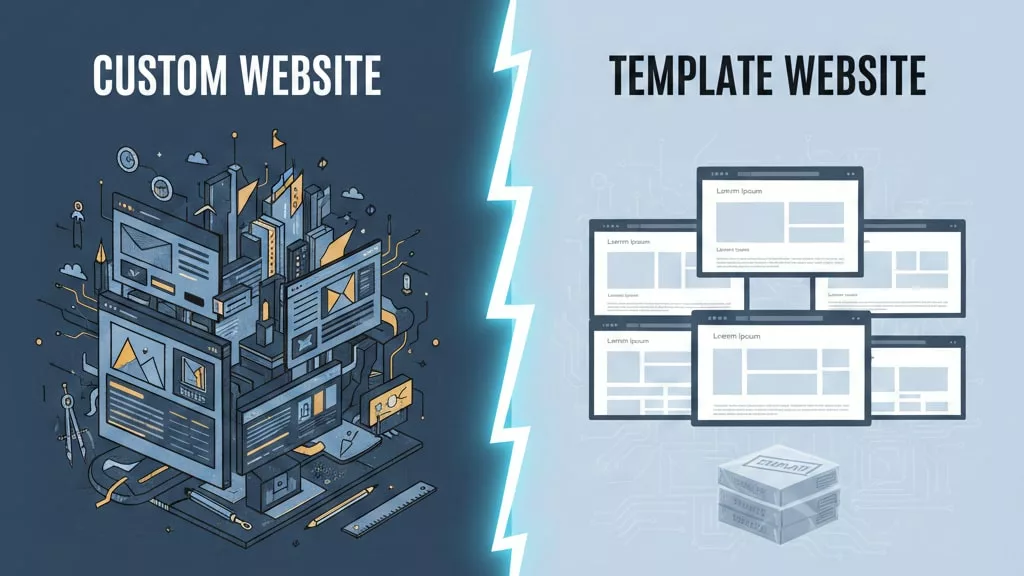
Launching a new website is a critical step for any organization. One of the most fundamental decisions you’ll face is whether to build a custom website or use a pre-made template. This choice isn’t just about aesthetics; it impacts your budget, timeline, security, and long-term growth potential.
This guide breaks down both options to help you make an informed decision that aligns with your business goals.
The Core Difference: Bespoke Tailoring vs. Ready-to-Wear
Think of a custom website as a bespoke suit. It is designed and built from the ground up exclusively for your business, considering every measurement and detail. A website template, conversely, is like a high-quality off-the-rack suit. It’s pre-designed, quick to acquire, and can look great, but it may require alterations to fit perfectly.
Let’s explore each in detail.
What is a Custom Website Design?
A custom website is engineered from scratch by a team of professionals (designers, developers). Every element from the user flow and layout to the underlying code is created to meet your specific business objectives, brand identity, and functional requirements.
Ideal for: Businesses with complex needs, strong brand identities, specific integrations (e.g., custom databases, proprietary software), and plans for significant growth.
Pros of a Custom Website:
-
Unique Brand Identity: Your site is one-of-a-kind, reinforcing brand authority and helping you stand out in a crowded market.
-
Tailored Functionality: Every feature serves a purpose. You get exactly what you need without bloat from unused template features.
-
Superior SEO Foundation: Developers can write clean, optimized code and structure the site for search engines from day one, often leading to better rankings.
-
Enhanced Performance & Security: Without unnecessary template code, sites can be faster and more secure. Security protocols can be specifically hardened for your needs.
-
Total Scalability & Flexibility: The site architecture is designed to grow with you. Adding new features or scaling infrastructure is typically more straightforward.
-
Long-Term Ownership & Control: You own the complete codebase, making it easier to switch hosting providers or agencies in the future.
Cons of a Custom Website:
-
Higher Initial Investment: Requires a significant upfront budget for strategy, design, development, and testing.
-
Longer Timeline: The process from conception to launch is measured in months, not days or weeks.
-
Requires Expert Teams: You must hire an experienced agency or in-house team to manage the project.
What is a Website Template?
A template is a pre-designed website framework. Using platforms like WordPress (with themes), Wix, Squarespace, or Webflow, you can populate a chosen design with your own content, colors, and logos. The core structure and functionality are predetermined.
Ideal for: Startups, solopreneurs, projects with tight budgets/deadlines, or businesses needing a simple online brochure or portfolio.
Pros of a Website Template:
-
Cost-Effective & Fast: Significantly lower initial cost and can be launched in a matter of days or weeks.
-
User-Friendly: Often built with drag-and-drop builders, requiring little to no technical knowledge to get started.
-
Pre-Built Features: Comes with standard functionalities (contact forms, galleries, blogs) ready to use.
-
Design Consistency: Themes are designed to be visually coherent, reducing the risk of poor design choices.
Cons of a Website Template:
-
Limited Uniqueness: Thousands of other sites may use the same template, diluting your brand’s distinctiveness.
-
Design & Functional Constraints: Customization is often confined to the template’s options. Unique business processes may not fit.
-
Performance & Bloat: Templates often come with excess code for features you don’t use, potentially slowing down your site.
-
Plugin Dependency & Security: Adding functionality requires third-party plugins, which can create conflicts, slow performance, and introduce security risks if not meticulously maintained.
-
Scalability Challenges: As your business grows, the template may become a limiting factor, potentially requiring a full rebuild sooner.
-
Ongoing Maintenance: You are responsible for updating the template, platform, and all plugins to ensure security and compatibility.
Custom Website vs. Template: How to Choose
Your decision should be guided by your business stage, goals, budget, and technical appetite.
Choose a CUSTOM WEBSITE if:
-
Your brand identity is a core competitive advantage.
-
You have complex functionality needs (e.g., custom user portals, complex e-commerce, integrations).
-
Performance, security, and SEO are top priorities.
-
You have a clear vision for growth and need a scalable digital foundation.
-
You have the budget to view your website as a long-term strategic investment.
Choose a WEBSITE TEMPLATE if:
-
You need to establish an online presence quickly and cost-effectively.
-
Your needs are standard (e.g., information pages, a simple blog, a basic contact form).
-
You have a limited budget and no in-house technical resources.
-
You are testing a business idea and need a viable MVP (Minimum Viable Product).
-
You can accept design and functional limitations for the sake of speed and affordability.
The Final Verdict: Think Long-Term
A template is an excellent short-term solution to get online quickly. However, it often becomes a long-term constraint. The initial savings can be eroded by plugin costs, redesigns, and the eventual need to migrate to a custom solution as your business matures.
A custom website is a strategic long-term asset. While the initial investment is higher, it builds a unique, scalable, and high-performing foundation that can grow with your business, deliver a superior user experience, and provide a stronger return on investment over time.
Ask yourself: Is your website a temporary tool or the cornerstone of your digital strategy? Your answer will point you in the right direction.


